Statement of Research
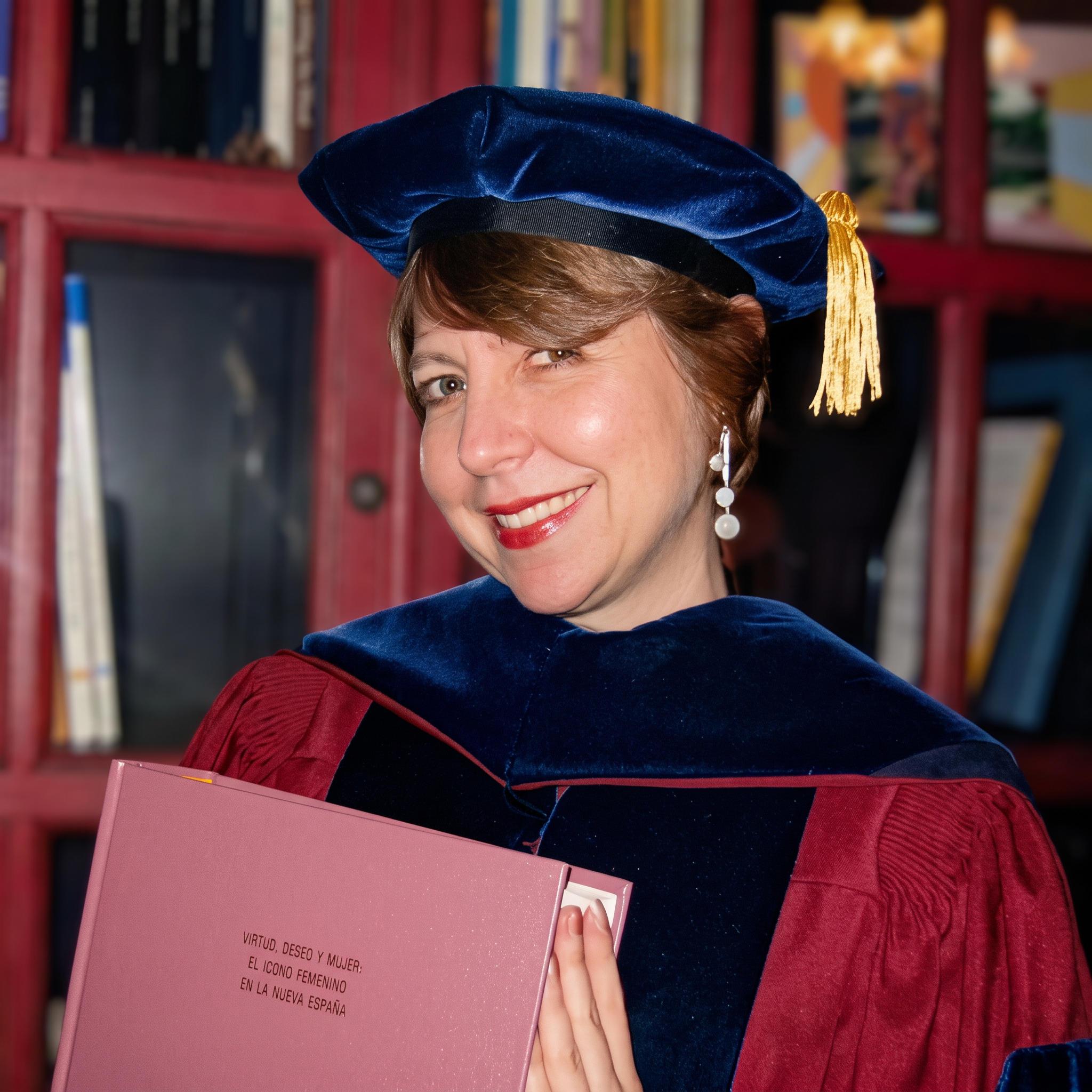
Family archive ©
" 'Man does not live by bread alone.' If I were hungry and destitute in the streets, I would not ask for a loaf of bread; I would ask for half a loaf of bread and a book." Thus, the poet of Granada addresses his Fuente Vaqueros neighbors in 1931, encouraging them to nourish their spirits with the life-giving force of the written word.
Since I was a little girl, I loved old books, religious paintings, estampitas de santos [small pictures of saints], and abandoned objects of devotion, which I often found—with permission—in mi madrina's chest of drawers. I carefully admired these treasured articles, pieces of a magical puzzle, awaiting discovery. Catholic relics and indigenous artifacts of love and war commingled in my childhood, knitting strong bonds in my soul, pulling their strings of memories, claiming their own voice. Those voices have lived inside me ever since, waiting to be brought forth—their light answering silent prayers from a past not as distant as I once thought.
Thus, my doctoral dissertation was instrumental in allowing me access to centuries of teachings that shaped the cultural conscience of Spanish women, both European and American, privileged and enslaved, canonized and condemned. Their lives call me through time and space, stirring up shared beliefs that—paraphrasing B. Marie Christian's work—are now in dialogue. It is the mysterious and explosive relationship between The Feminine and the Sacred—as Clément and Kristeva have so beautifully pondered—that marks my path as I listen to the silences left by so many women willing to surrender everything to do God's will, a will interpreted by a Church that held the power to control their destinies in this world, and in the world to come.